
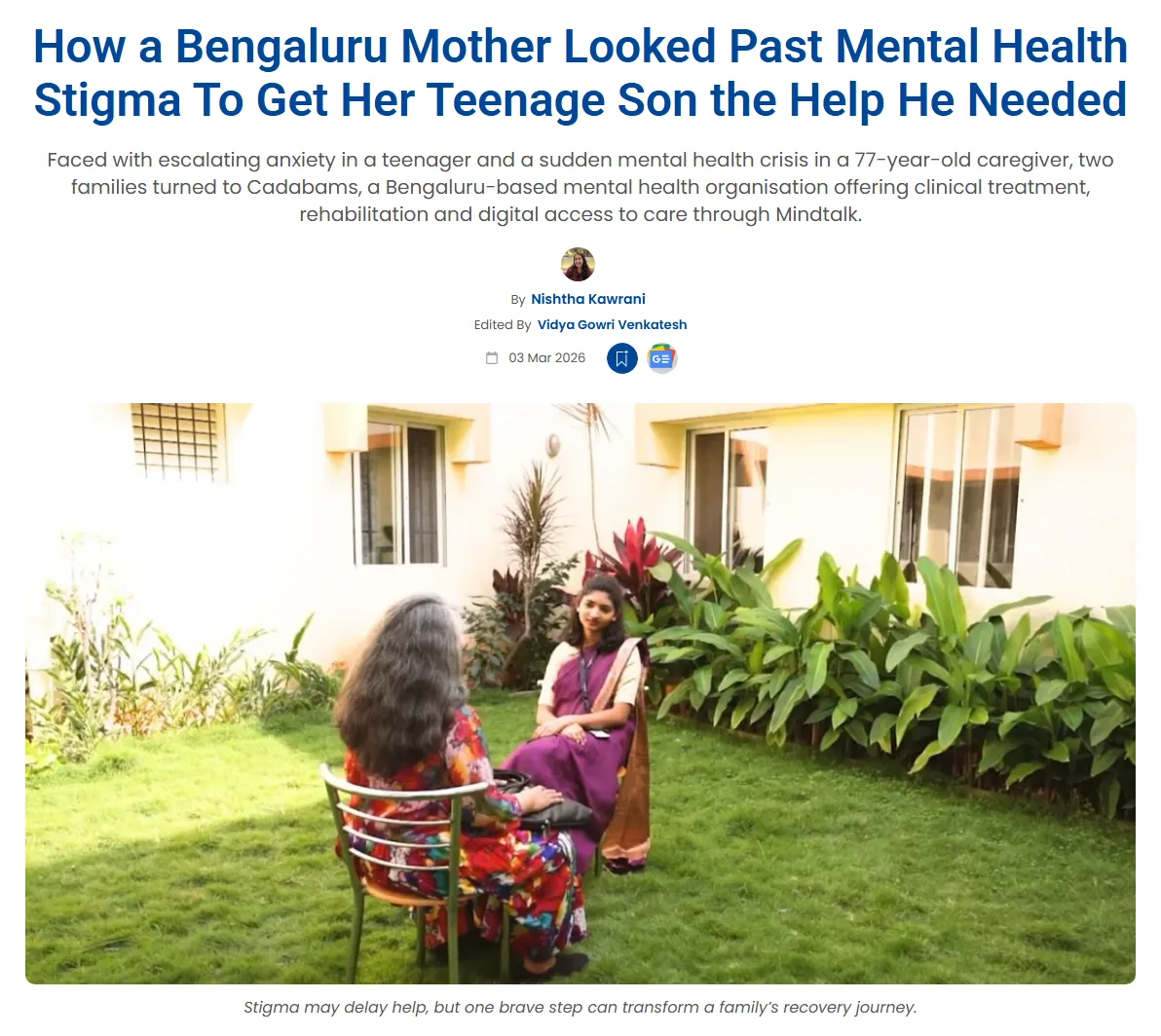
"We were extremely worried. But the way they handled everything made us feel safe, like we weren't alone in this anymore." The memory still sits heavily with a 46-year-old mother in Bengaluru. Her son had always been a bright student, but between Class 11 and 12 the pressure of a competitive entrance exam began to change him. Sleepless nights became routine, irritability crept in, and what looked like normal academic stress spiralled into something far more serious.
As a parent she sensed it before she understood it, and the helplessness was overwhelming. When a child is physically unwell there are tests and clear next steps. When emotional distress takes over, parents are left questioning whether they are overreacting, fearing judgement, and wondering what psychiatric care might mean for the family's reputation.
The weight of silence in India
Nearly 150 million Indians need professional psychological support, The Better India noted, yet many never receive it, held back by limited access, cost, stigma and the belief that mental illness is a personal weakness. "In our culture, there's a lot of self-blame, parents asking what they did wrong, individuals internalising guilt. That stops people from seeing mental health as a condition that deserves care," said Sandesh Cadabam, Managing Director of Cadabams Group.
A late-night decision
The night the family finally sought help was one of quiet panic. Instead of judgement, the mother recalls being met with calm. Over the following weeks her son began structured care: therapy, clinical evaluation and consistent follow-ups. "This isn't like a fever or dengue that passes overnight. It's a condition, and healing takes patience and time," she says. Seven years later he is stable and rebuilding his life. "Why suffer when there is a solution? If you are okay, everyone around you will be okay too."
When memory began to slip
For another family, concern began with subtle memory lapses in their 77-year-old mother, a caregiver to her husband with Parkinson's disease. Soon she stopped sleeping, spoke through the night, and medication prescribed elsewhere pushed her into a manic phase. At Cadabams' JP Nagar facility, clinicians chose to observe rather than rush to confirm a diagnosis. Through structured routines, therapeutic engagement, careful medication adjustments and a brief period with limited visits, calm gradually returned. She was discharged nearly 90% recovered. "What stayed with us wasn't just that she got better but also the patience and dignity with which the entire process was handled," a family member said.
Reaching those who never walk through the door
For those who never reach a clinic, Cadabams built Mindtalk, a clinically guided digital companion offering screening, journaling, progress tracking and recovery guidance between therapy sessions. "Technology should never replace therapists. It should enable care, bridge gaps, and support recovery between sessions," Sandesh Cadabam said. Dr Anitha Bharathan, Consultant Clinical Psychologist at Cadabams, added that many people struggle in the days between sessions, and that Mindtalk makes support continuous and accessible without replacing clinicians. The platform now facilitates 1,750 to 2,000 digital sessions a month, many of them for first-time help seekers.
Support at Cadabam's Hospitals
Whether it is a teenager buckling under exam pressure or an ageing parent whose behaviour has changed, early, patient care makes recovery possible. Cadabam's Hospitals offers child and adolescent mental health care, specialist dementia and geriatric psychiatry, and family support at every step. Our team is here to help.