
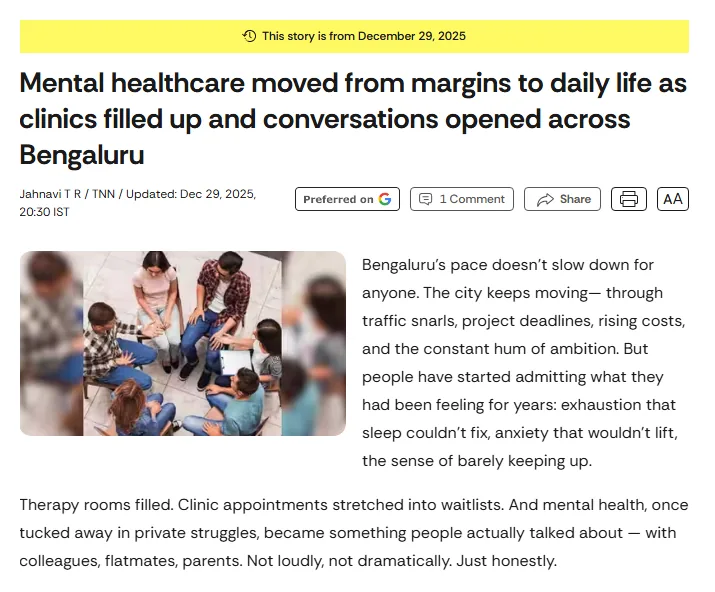
Bengaluru's pace does not slow down for anyone. But in 2025, The Times of India reported, people started admitting what they had felt for years: exhaustion that sleep could not fix, anxiety that would not lift, the sense of barely keeping up. Therapy rooms filled, clinic appointments stretched into waitlists, and mental health, once tucked away in private struggles, became something people actually talked about with colleagues, flatmates and parents.
A year of rising demand
Across the city, psychiatric centres and therapy practices recorded a marked increase in people seeking help, with facilities seeing anywhere from 10% to 250% more walk-ins and in-patients than the previous year. Adults in their thirties and forties formed the most visible group, and many worked in the IT sector, reporting pressure linked to deadlines, long hours and workplace uncertainty. Clinicians said the shift came from recognising that untreated stress or low mood could affect family life and work.
Cadabam's Hospitals: 250 to 300% more OPD visits
Support did not remain an individual pursuit. Companies introduced well-being initiatives, colleges tied up with service providers, and some apartment associations arranged counselling for residents. Cadabam's Hospitals reported a 250 to 300% rise in OPD visits and a 40 to 42% rise in admissions. The centre also saw more couples seeking therapy, reflecting a growing acceptance that relationship strain need not be borne alone. These moves did not erase stigma, the report noted, but showed how support could be organised at a community level.
Awareness, cost and children
Experts traced the change to sustained awareness efforts, with mental health professionals more visible in the media and social media offering language and testimonies that many found reassuring. Yet misconceptions about psychiatric medication persisted, and people with severe conditions such as OCD, depression, psychosis and schizophrenia still took between four and 14 months to seek help.
Cost remained one of the biggest barriers, with therapy sessions of Rs 1,500 to 2,000 unaffordable for many households. A worrying trend was the rise in mental health concerns among children and adolescents, including ADHD, depression, excessive screen use and early-onset OCD and suicidal tendencies in those aged 14 to 18. Psychiatrists stressed that early intervention, ideally between eight and ten years of age, is far more effective, but stigma often delayed parents from seeking help.
What 2025 leaves behind
The year did not resolve the city's mental health challenges, but it marked a shift in how residents understood well-being. More people incorporated yoga, meditation and physical activity into their routines, and many sought help earlier than before. Rising demand, growing institutional support and early signs of behavioural change suggested a city learning to treat mental health as a shared responsibility.
Care at Cadabam's Hospitals
If you are among the many Bengalureans ready to talk, Cadabam's Hospitals offers outpatient counselling, specialist care for depression, anxiety and OCD, and child and adolescent services. Our team is here to help you take the first step.