
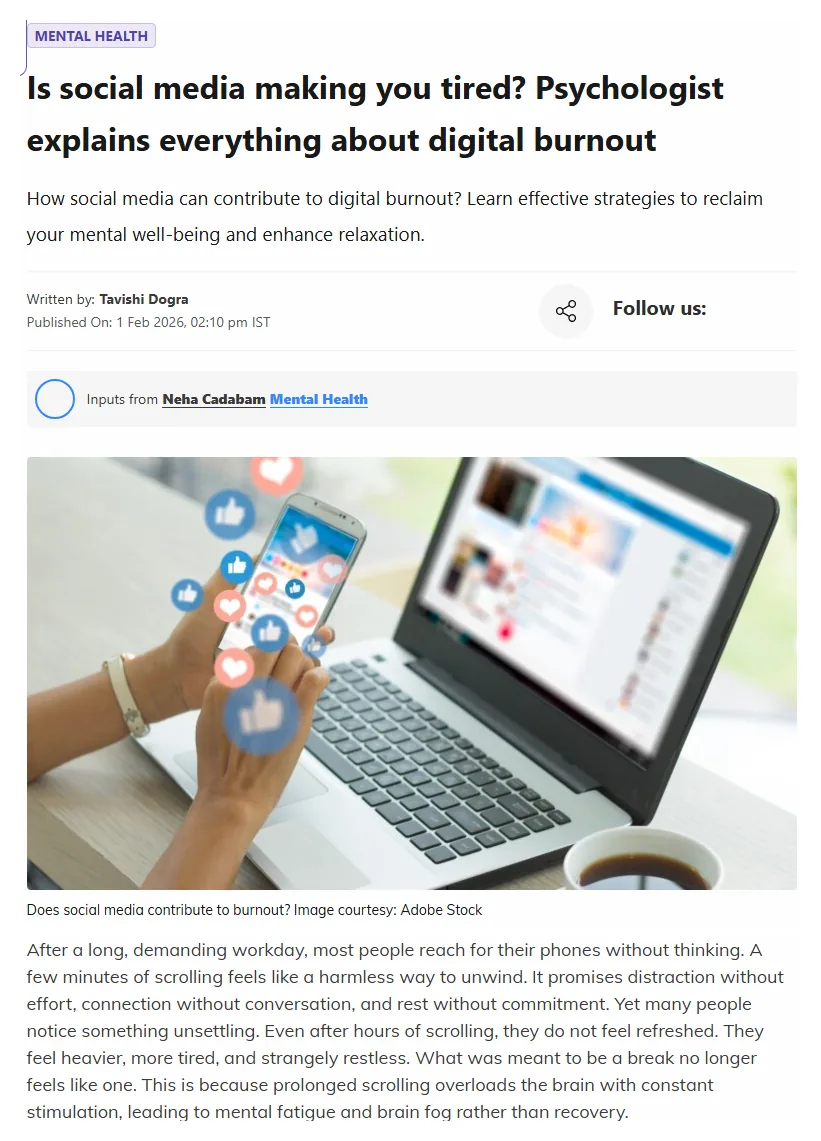
After a long, demanding workday, most people reach for their phones without thinking. A few minutes of scrolling feels like a harmless way to unwind: distraction without effort, connection without conversation, rest without commitment. Yet many people notice something unsettling. Even after hours of scrolling, they do not feel refreshed. They feel heavier, more tired and strangely restless. Health Shots asked Neha Cadabam, Senior Psychologist and Executive Director at Cadabam's Hospitals, why.
Why scrolling is not recovery
For the brain to truly unwind, stimulation needs to be reduced. It needs quieter moments to process the day, slow down and reset. "Social media works against this. Every scroll brings new information, emotional cues, opinions, and comparisons," Neha Cadabam told Health Shots. Instead of calming the nervous system, it keeps the mind alert and engaged when it should be powering down, making it harder to concentrate later and contributing to the mental cloudiness many people feel the next day.
Why professionals in their 20s and 30s are hit hardest
"Most in this age group face career pressure, uncertainty, and the need to stay visible and relevant. Social media quietly carries those pressures into personal time," she said. Even while resting, the mind keeps tracking progress, measuring success and comparing. Over time, sleep feels lighter, attention spans shorten and emotions feel blunted rather than balanced. Many people wake up mentally foggy because their brains never truly disengaged the night before.
The dopamine loop
"Another reason scrolling becomes so hard to stop lies in how it affects the brain's reward system. Social media delivers quick bursts of dopamine, creating a cycle where people keep scrolling even when they are no longer enjoying it," she explained. The brain seeks the next hit of novelty, not rest, which is why many continue long after they feel tired or bored.
Eight ways to use social media without letting it drain you
The solution is not quitting social media, but learning to stop using it as a substitute for recovery.
- Create a pause between work and scrolling. A 15 to 30 minute buffer spent walking, stretching or sitting quietly lets the nervous system disengage first.
- Create screen-free zones at home, such as the dining area or bedroom, so the brain associates those spaces with rest.
- Be intentional about why you scroll. Ask yourself, "Am I resting or avoiding discomfort?"
- Protect the hour before sleep. Late-night scrolling delays melatonin and disrupts deep sleep. Swap screens for reading, light music or breathing exercises.
- Pay attention to how you feel after scrolling. More tired, restless or irritable means your mind did not rest.
- Build low-stimulation time into your routine, such as journaling, slow exercise or simply sitting without input.
- Reduce comparison-heavy content during stressful phases. Curate or mute feeds that add pressure when energy is low.
- Listen to exhaustion rather than fight it. Persistent fatigue, emotional numbness, poor sleep and difficulty focusing are signals, not personal failures, and addressing them early prevents deeper burnout.
Support at Cadabam's Hospitals
If you are doing everything right and still waking up exhausted, it may be more than a screen habit. Cadabam's Hospitals offers confidential counselling and evidence-based care for stress, burnout and sleep difficulties, helping you build recovery habits that actually restore you. Our team is here to help.