
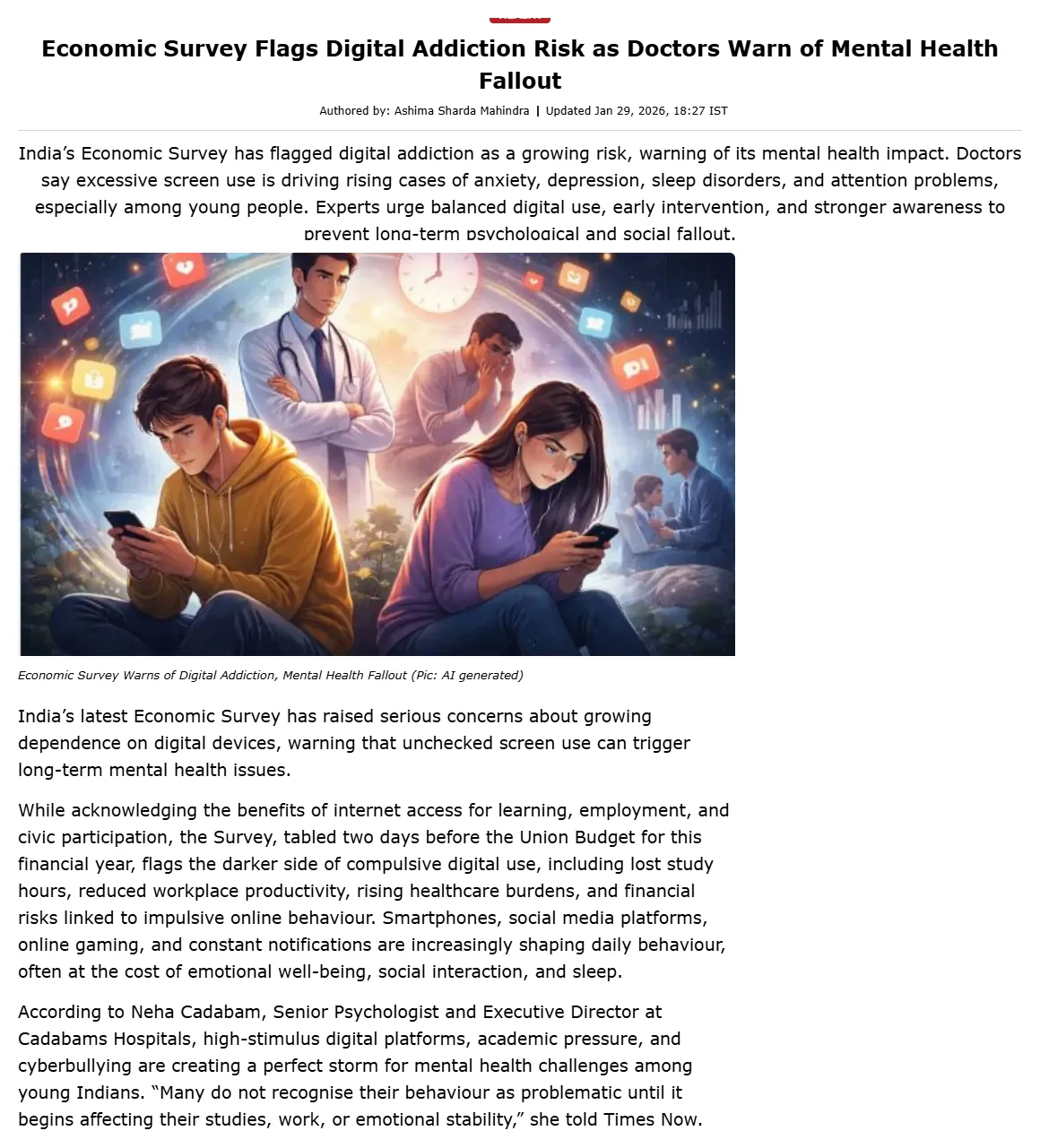
India's latest Economic Survey has raised serious concerns about growing dependence on digital devices, warning that unchecked screen use can trigger long-term mental health issues. While acknowledging the benefits of internet access for learning, employment and civic participation, the Survey flagged the darker side of compulsive digital use: lost study hours, reduced workplace productivity, rising healthcare burdens and financial risks linked to impulsive online behaviour. The message, Times Now reported, is clear: digital addiction is no longer a fringe issue but a systemic one.
What digital addiction is
Digital addiction is the compulsive, excessive use of digital devices that interferes with normal life, relationships, work or health. It is not limited to screen time; it includes an unhealthy psychological dependence on constant online engagement, validation or stimulation. Doctors see patients who struggle to disconnect, feel restless or irritable without their phones, and experience reduced attention spans. In severe cases, digital overuse mirrors addiction, with cravings, withdrawal symptoms and loss of control.
According to Neha Cadabam, Senior Psychologist and Executive Director at Cadabam's Hospitals, high-stimulus digital platforms, academic pressure and cyberbullying are creating a perfect storm for mental health challenges among young Indians. "Many do not recognise their behaviour as problematic until it begins affecting their studies, work, or emotional stability," she told Times Now.
The growing mental health fallout
Prolonged screen time, especially on social media, is associated with increased anxiety, low self-esteem, body image issues and depressive symptoms. Constant comparison, online bullying and exposure to unrealistic lifestyles distort self-perception, particularly among young users.
"There has been a sharp rise in individuals, especially students and young adults, presenting with anxiety disorders, depressive symptoms, stress-related conditions, and sleep-related problems, where excessive screen exposure is a common underlying factor," she said.
Sleep disruption is a major concern, since late-night use suppresses melatonin and causes insomnia and poor sleep quality. Chronic sleep deprivation worsens mood disorders and weakens concentration. Children and adolescents are the most vulnerable, with lack of sleep linked to behavioural issues, academic decline, emotional outbursts and social withdrawal tied to excessive gaming and phone use. Many parents seek help only after the habits are deeply entrenched.
The way forward
Digital devices are not harmful in themselves; the task is to create balance. For adults that means self-regulation. For children it means boundaries on screen time, more offline activity, physical exercise and regular sleep routines. Doctors also called for greater awareness, digital literacy programmes, early screening for problematic digital use, and digital well-being education in school curricula.
Support at Cadabam's Hospitals
If screens have started to crowd out sleep, focus or mood in your life or your child's, help is available. Cadabam's Hospitals offers specialist care for anxiety, depression and behavioural addiction, including structured support for problematic internet and gaming use. Our team is here to help.