
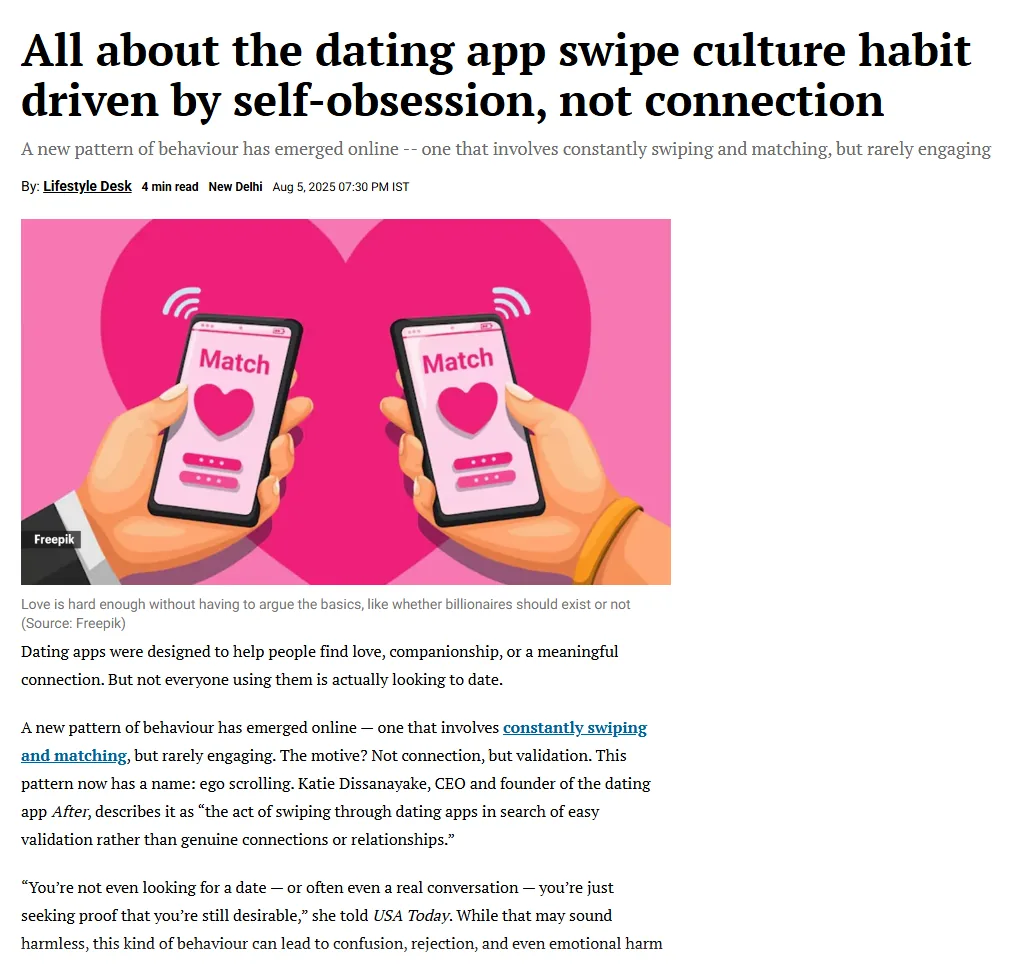
Dating apps were designed to help people find love, companionship or a meaningful connection. But not everyone using them is actually looking to date. A new pattern of behaviour has emerged online, one that involves constantly swiping and matching but rarely engaging. The motive is not connection but validation, and it now has a name: ego scrolling.
Katie Dissanayake, founder of the dating app After, describes it as "the act of swiping through dating apps in search of easy validation rather than genuine connections or relationships." You are not looking for a date, or even a real conversation, just proof that you are still desirable. It may sound harmless, but it can lead to confusion, rejection and emotional harm for people who are genuinely seeking connection.
The Indian Express asked Neha Cadabam, Senior Psychologist and Executive Director at Cadabam's Hospitals, how to recognise the habit and how to break it.
How to tell if you are ego scrolling
"Ego scrolling is a pattern where individuals swipe or browse through dating profiles not with the intention of connection, but more for a sense of validation, distraction, or even entertainment," Neha Cadabam told indianexpress.com. "One way to recognise this behaviour is by observing your mindset while using dating apps. Are you swiping out of boredom, stress, or a need to feel attractive, rather than curiosity about the other person?"
To shift toward more intentional dating, she advised pausing to reflect on what you are really looking for, whether companionship, meaningful conversation or a long-term relationship. "Setting small boundaries like limiting swiping time, reading profiles more mindfully, and engaging in thoughtful conversations can help ground the experience."
The emotional toll on people seeking connection
For people earnestly looking for a relationship, repeated disinterest or ghosting can lead to feelings of inadequacy, self-doubt and emotional fatigue. "Over time, this can contribute to a cycle of low self-esteem where users question their worth or start to internalise rejection as a reflection of their value," she observed.
The unpredictable nature of dating apps, where interactions often feel disposable, can trigger emotional burnout, especially for those sensitive to social cues. It is essential to remember that the digital space rarely reflects your real relational potential. "Grounding oneself in real-life social connections and seeking emotional support, whether through friends or therapy, can help buffer these effects and restore a sense of self-worth."
Avoidant attachment and the appeal of the swipe
"Individuals with avoidant attachment styles often experience discomfort with emotional closeness and may find ego scrolling a low-risk way to feel desired without the vulnerability of real connection. The controlled environment of swiping, where they can engage or disengage at will, offers a sense of emotional safety," she explained.
Breaking the pattern starts with gentle self-exploration. "Becoming curious about what intimacy means to them and acknowledging fears around closeness is a good first step. Psychotherapy can be beneficial here, as it creates a safe space to unpack these patterns."
Support at Cadabam's Hospitals
If dating apps have left you feeling drained, rejected or unsure of your own worth, you do not have to work through it alone. Cadabam's Hospitals offers confidential counselling and psychotherapy that help you understand your attachment patterns, rebuild self-esteem and connect more intentionally. Our team is here to help.