
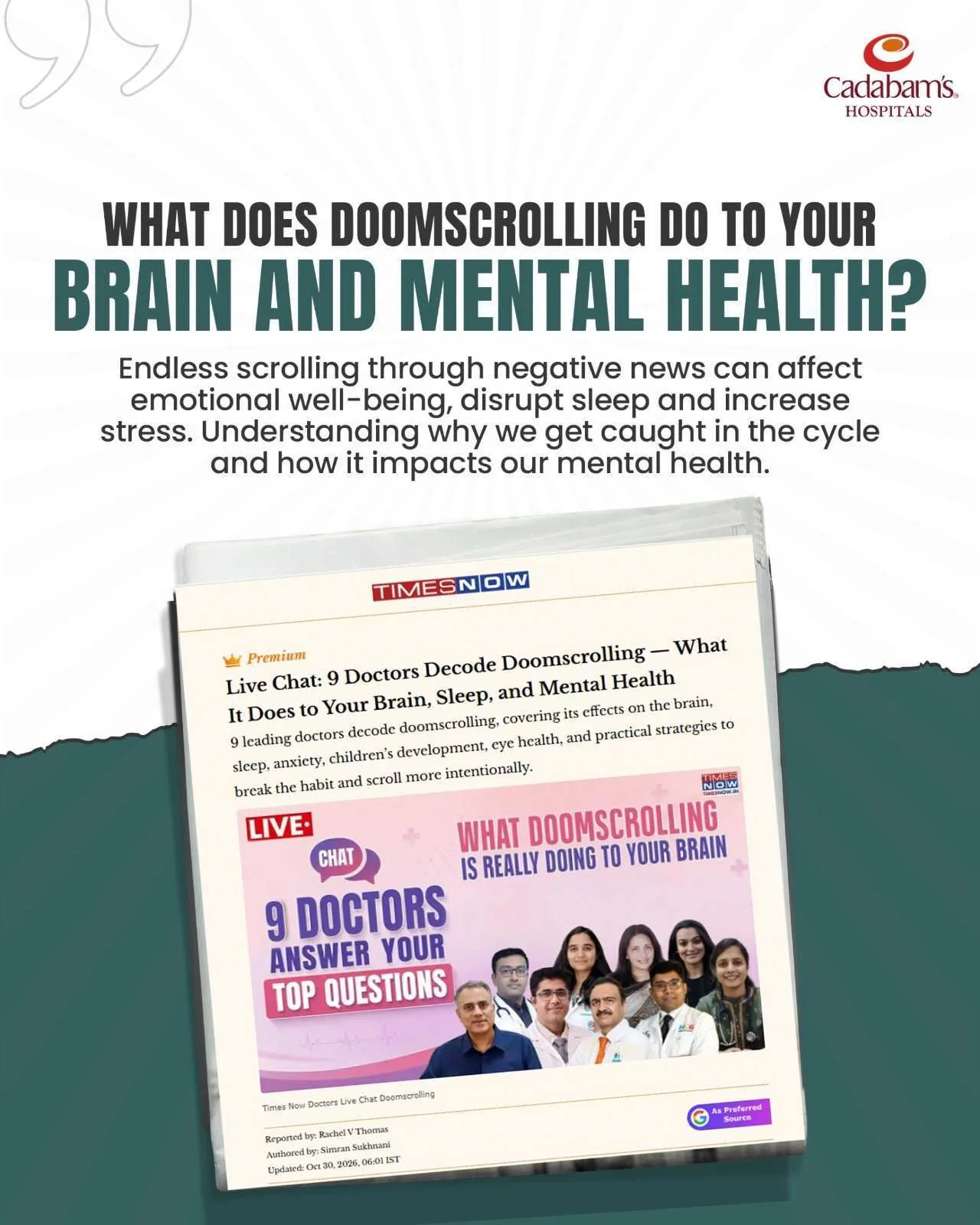
Most of us have picked up the phone for a quick news check and looked up an hour later feeling worse. On 30 October 2026, Times Now hosted a live chat in which nine specialists in psychiatry, neurology, ophthalmology and psychology answered questions about doomscrolling. Dr. Priya Raghavan, Senior Consultant Psychiatrist at Cadabam's Hospitals, was one of them.
When scrolling becomes a problem
For Dr. Raghavan, the clearest warning sign is the feeling of being unable to stop. "Individuals may tell themselves they will check one more update, only to spend another hour consuming distressing information," she said. "This can become a repetitive coping mechanism where scrolling temporarily reduces uncertainty but ultimately reinforces the need to keep checking."
Why the brain locks onto bad news
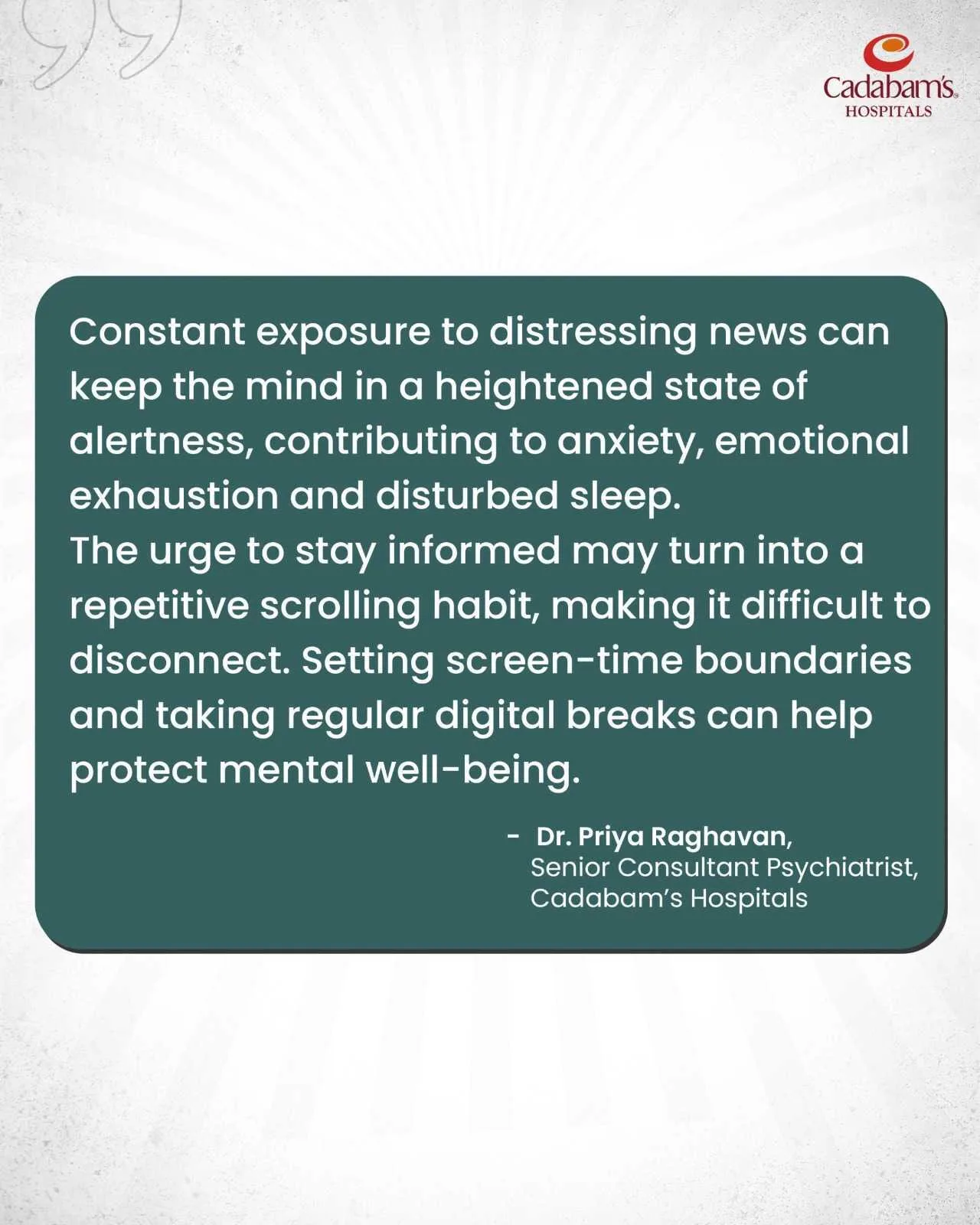
She explained that the brain is wired to prioritise potential threats, because spotting danger is a survival mechanism. That is why negative news grabs attention more easily than neutral or positive information. "When individuals continuously consume distressing updates, they may remain in a heightened state of alertness, increasing mental fatigue."
That constant load has a cost. According to Dr. Raghavan, repeated exposure to distressing information increases cognitive load, leaving fewer mental resources for decision-making, problem-solving and emotional regulation.
The anxiety loop
Doomscrolling can also keep anxiety going. Dr. Raghavan described the cycle: a person feels anxious, checks the news to reduce uncertainty, feels brief relief, then meets another distressing update that sets off more anxiety. "The behaviour provides short-term reassurance but may maintain emotional distress over time."
Older adults and existing conditions
On cognitive health in older adults, she was careful: there is currently not enough evidence to say doomscrolling directly causes dementia. Poor concentration after a short night or a long stretch online is not the same as progressive cognitive decline. For people with existing mental health conditions, though, repeated exposure to alarming or misleading content may increase distress, suspiciousness or emotional arousal and can aggravate symptoms.
Her advice is to set screen-time boundaries and take regular digital breaks. Read more on coping with doomscrolling during a crisis.
If constant scrolling is affecting your sleep, mood or focus, or that of someone you love, Cadabam's Hospitals' psychiatrists and psychologists can help. Call +91 97414 76476 for a confidential consultation.