
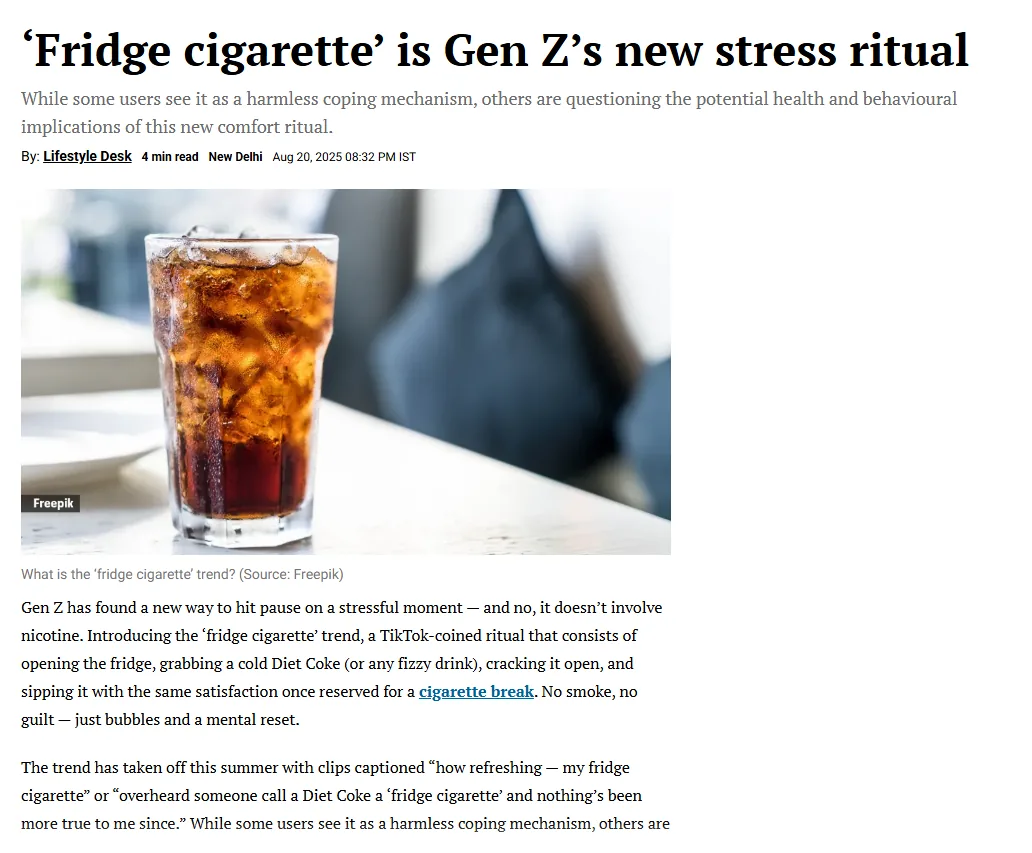
Gen Z has found a new way to hit pause on a stressful moment, and it does not involve nicotine. The "fridge cigarette" is a TikTok-coined ritual: open the fridge, grab a cold Diet Coke or any fizzy drink, crack it open, and sip it with the same satisfaction once reserved for a cigarette break. No smoke, no guilt, just bubbles and a mental reset.
The trend took off over the summer with clips captioned "how refreshing, my fridge cigarette". Some users see it as a harmless coping mechanism. Others question what it says about how young people manage stress. The Indian Express asked Neha Cadabam, Senior Psychologist and Executive Director at Cadabam's Hospitals, whether the trend signals an emotional reliance on sugary or artificially sweetened drinks.
A coping mechanism in disguise
"Yes, the 'fridge cigarette' trend can be viewed as an emotional coping mechanism, particularly among young people navigating stress, burnout, or emotional fatigue," Neha Cadabam told indianexpress.com. "While the term itself may sound humorous or harmless, it reflects a growing pattern of relying on quick comfort habits to self-soothe. Reaching for a cold, fizzy drink can offer a brief sense of control, pleasure, or distraction in a fast-paced or overstimulating environment."
The behaviour becomes concerning when it starts to replace more sustainable strategies such as rest, conversation, physical activity or emotional expression. Over time, the brain can build a habit loop in which stress relief is associated solely with that one ritual. While not harmful in moderation, it may mask underlying stressors that need deeper attention.
Why small rituals are so comforting
Such rituals work because they are simple, accessible and familiar. "In the case of the 'fridge cigarette,' the appeal lies in the anticipation and repetition, much like how traditional smoke breaks were once used to create space and relief in daily routines. However, when these rituals are tied primarily to emotional regulation, they may lead to dependency, especially if healthier coping mechanisms are not in place," she explained.
The effects of relying on diet sodas
Relying on artificially sweetened drinks to manage emotions "may discourage the development of more adaptive coping skills. It may also create a cycle of emotional dependence, where the absence of the drink leads to increased irritability or discomfort." Physically, although diet sodas are marketed as sugar-free, studies suggest their sweeteners can still influence metabolism, appetite regulation and gut health, with some research linking heavy intake to mood fluctuations and cravings for sweet or processed foods.
"The key is not to eliminate occasional enjoyment but to recognise when the habit is being driven by emotional needs rather than genuine thirst or preference. Helping young people become more aware of these patterns and encouraging balance, variety, and intentionality in their routines can foster healthier long-term habits," she concluded.
Support at Cadabam's Hospitals
If a small ritual has become the only thing standing between you and a stressful day, it may be time to look at what lies underneath. Cadabam's Hospitals offers counselling and evidence-based care for stress and burnout, helping young people build coping skills that last. Our team is here to help.