
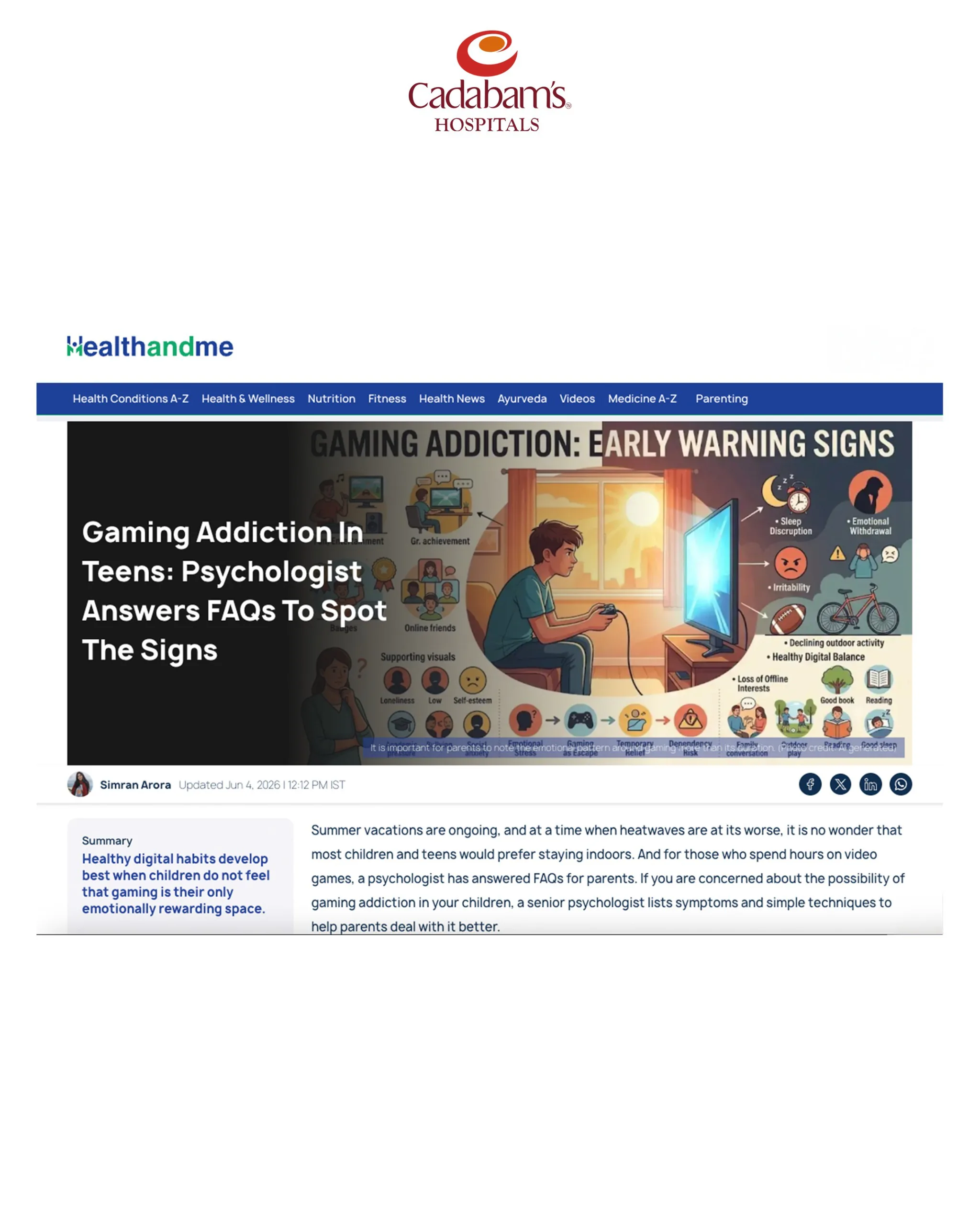
With summer vacations keeping children indoors for longer hours, many parents are becoming increasingly concerned about excessive gaming. But according to experts, the real issue isn't the amount of time spent playing — it's the emotional dependence that gaming can create.
Neha Cadabam, Senior Psychologist and Executive Director at Cadabam's Hospitals, was featured in Health and Me, where she answered frequently asked questions about gaming addiction in children and teenagers.
In the interview, she explains that gaming becomes problematic when it serves as a child's primary coping mechanism for stress, loneliness, anxiety, low self-esteem, or academic pressure. While gaming itself is not harmful, relying on it to regulate emotions or escape real-life challenges can affect a child's mental and emotional well-being.
Neha Cadabam also highlights that gaming addiction often goes unnoticed because many children continue to perform well in school and maintain their daily routines. As a result, parents should look beyond screen time and pay closer attention to changes in behaviour, emotional health, and social interactions.
Cadabam's Hospitals offers integrated mental health support for children, teens, and families navigating gaming and behavioural concerns. If you or someone you know is struggling, our team is here to help.