
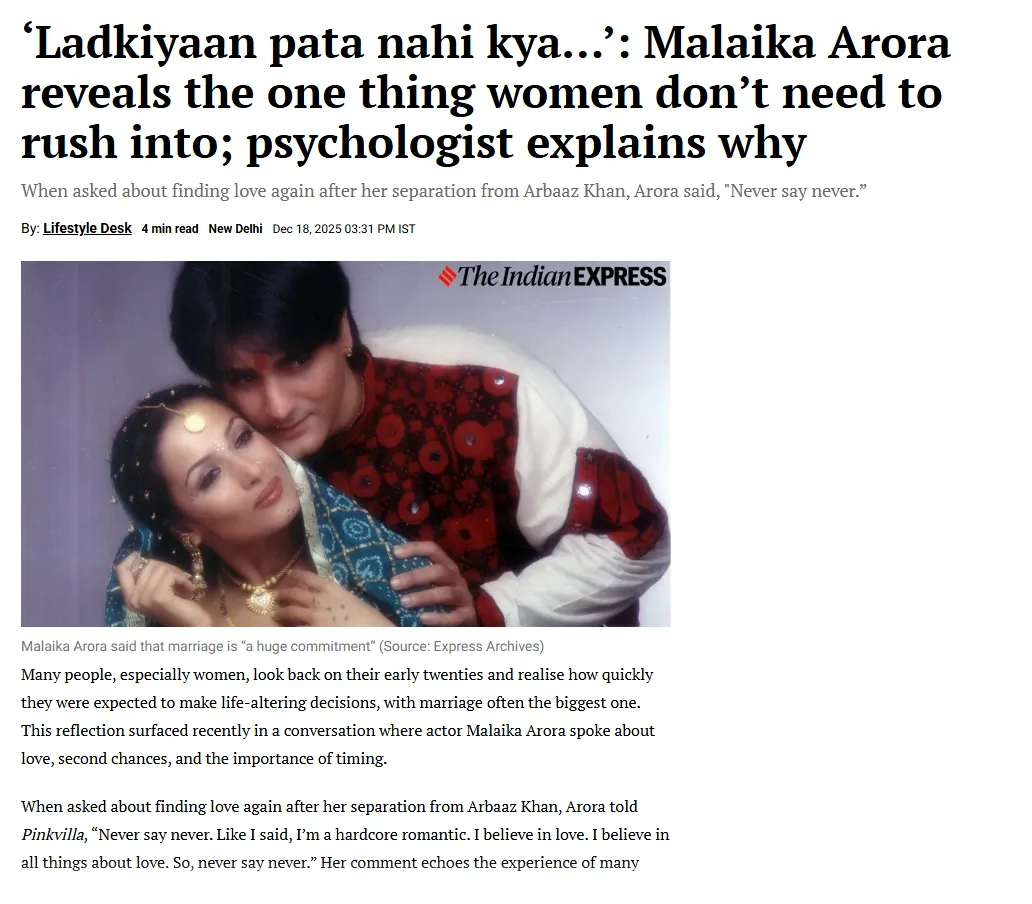
Many people, especially women, look back on their early twenties and realise how quickly they were expected to make life-altering decisions, with marriage often the biggest one. Actor Malaika Arora recently reflected on this in a conversation with Pinkvilla. Asked about finding love again after her separation from Arbaaz Khan, she said, "Never say never. I'm a hardcore romantic. I believe in love."
Asked what she would tell her younger self, she was clear: "Take your time to get married." Marriage is "a huge commitment", she said, adding that women do not need to marry so soon. "Work a little, understand life's journey, and then take that plunge. I was very young when I got married."
The Indian Express asked Dr Anitha B, Clinical Psychologist at Cadabam's Hospitals, how marrying young shapes emotional development and what real readiness looks like.
How marrying young affects identity
"From a psychological perspective, marrying very young can sometimes interrupt the natural process of identity formation," Dr Anitha told indianexpress.com. "Early adulthood is a phase where individuals explore personal values, career direction, emotional boundaries, and self-understanding. When marriage happens too early, the individual may begin to define themselves primarily through the relationship rather than as an independent person."
Over time, this can affect emotional maturity, decision-making and long-term relationship satisfaction. Couples who marry later often report greater stability because they have had time to understand their own needs, communication styles and emotional triggers before committing.
Signs of genuine readiness
Emotional readiness for marriage shows up as self-awareness, emotional regulation and the ability to handle conflict without fear or avoidance. "Practically, readiness shows up as financial stability, clarity about life goals, and the capacity to take responsibility for both personal and shared decisions. A person who is ready for marriage usually does not view it as an escape from loneliness, pressure, or social timelines. Instead, they see it as a conscious partnership based on respect, shared values, and emotional safety," she noted.
Readiness or an emotional void?
"After a separation or divorce, openness to love again is influenced by emotional healing, self-reflection, and the ability to process grief without bitterness. People who are genuinely ready for a new relationship tend to feel emotionally complete on their own and are not urgently seeking validation," Dr Anitha said. Those trying to fill a void, by contrast, often seek immediate relief, constant reassurance or distraction from loneliness. "A useful marker of readiness is whether the individual feels curious and hopeful about connection rather than anxious or dependent on attention to feel stable."
Support at Cadabam's Hospitals
Whether you are weighing a commitment, recovering from a separation or working out who you are outside a relationship, talking it through helps. Cadabam's Hospitals offers confidential counselling and psychotherapy for individuals and couples at every stage. Our team is here to help.