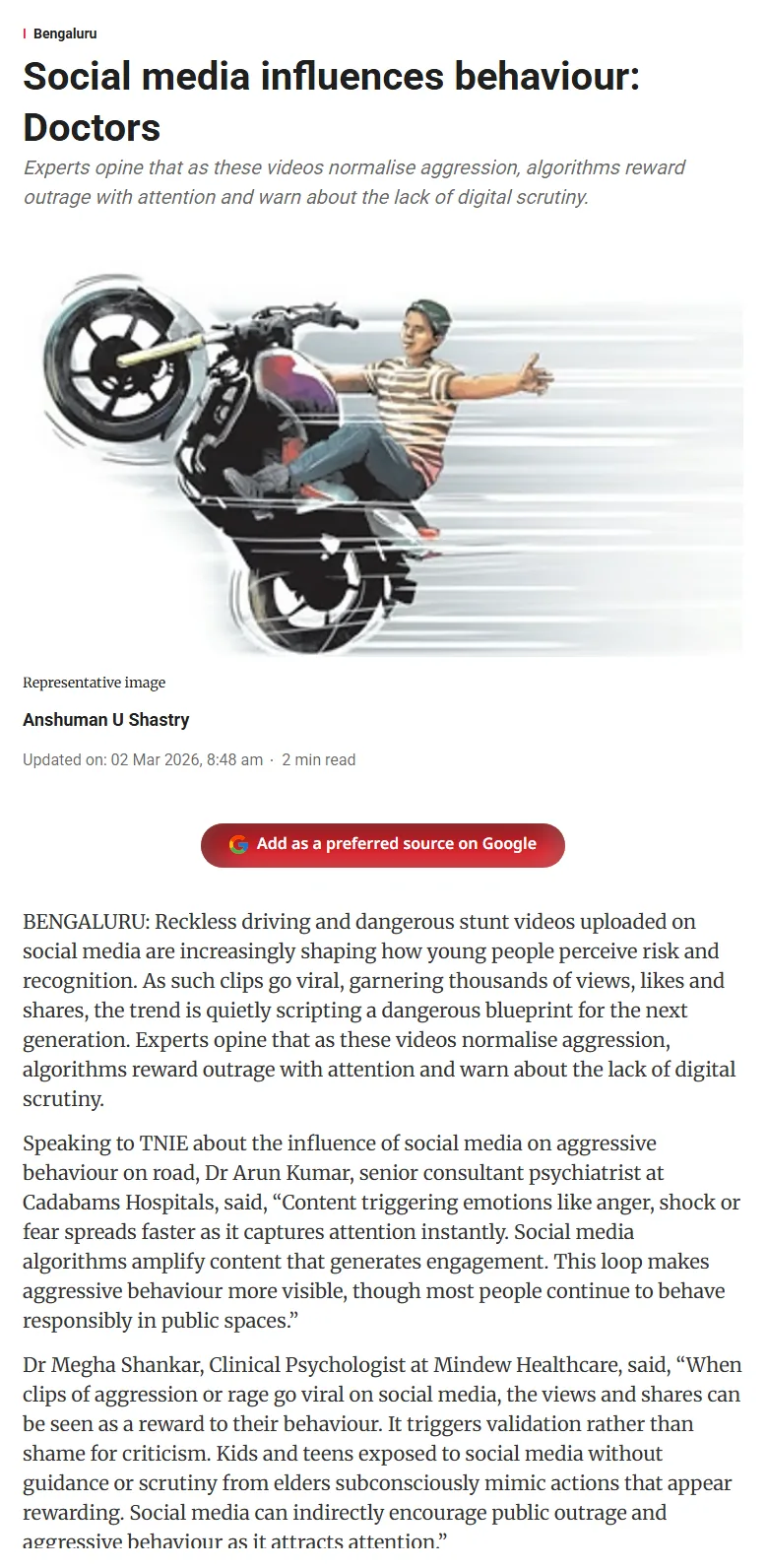
Reckless driving and dangerous stunt videos uploaded to social media are increasingly shaping how young people perceive risk and recognition, The New Indian Express reported from Bengaluru. As such clips go viral, gathering thousands of views, likes and shares, they quietly script a dangerous blueprint for the next generation. Experts warned that the videos normalise aggression, that algorithms reward outrage with attention, and that digital scrutiny is lacking.
Why aggressive content spreads
"Content triggering emotions like anger, shock or fear spreads faster as it captures attention instantly," Dr Arun Kumar, Senior Consultant Psychiatrist at Cadabam's Hospitals, told the paper. "Social media algorithms amplify content that generates engagement. This loop makes aggressive behaviour more visible, though most people continue to behave responsibly in public spaces."
When clips of rage go viral, other clinicians added, the views and shares act as a reward, triggering validation rather than shame. Children and teens exposed to such content without guidance from elders subconsciously mimic actions that appear rewarding.
Why confrontation turns into aggression
People performing risky stunts or driving on the wrong side of the road usually react aggressively when confronted. "When risk taking is associated with identity or social approval, the questioning is perceived as an attack. The aggressive response often comes from defensiveness, embarrassment, or fear of losing presumed social status," Dr Kumar explained. In many cases, anger is a protective reaction rather than the primary intention.
The call for awareness
Bengaluru's traffic police acknowledged that young people are risking their lives to create videos for social media and called for an awareness drive aimed at both youth and parents. "We cannot regulate social media, but we can educate people in being responsible," a senior officer said. Psychologists urged an end to glorifying such behaviour online and for children to be taught social responsibility and consequences at an impressionable age.
Support at Cadabam's Hospitals
Impulsivity, sensation-seeking and anger that spills into risky behaviour can be understood and managed. Cadabam's Hospitals offers anger management support, counselling and child and adolescent services that help young people and families build healthier ways to seek recognition. Our team is here to help.