
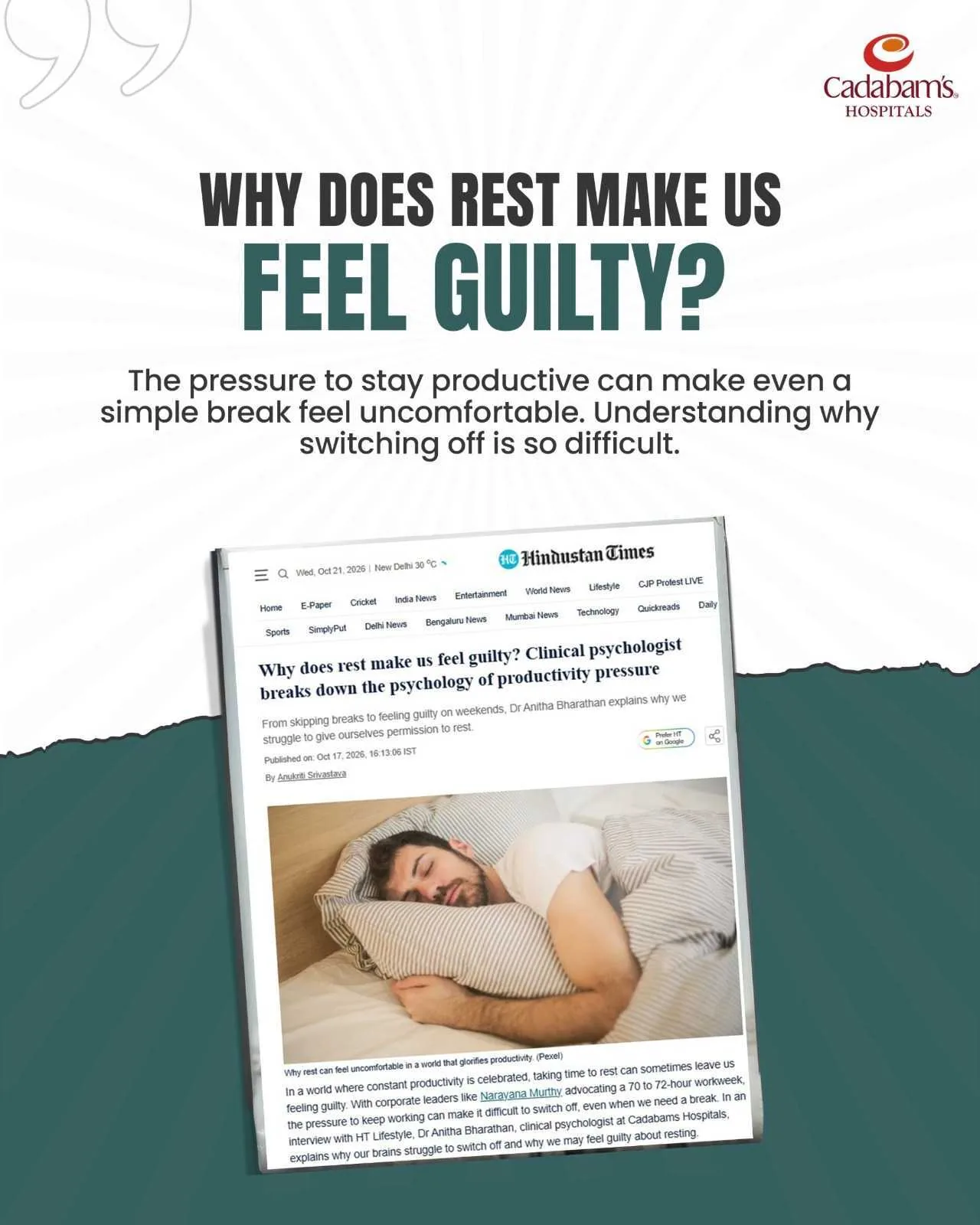
With corporate leaders advocating 70 to 72-hour workweeks, the pressure to keep working can make it hard to switch off, even when we badly need a break. Hindustan Times explored why rest so often comes with guilt on 17 October 2026, in an interview with Dr. Anitha Bharathan, Clinical Psychologist at Cadabam's Hospitals.
When self-worth is tied to productivity
According to Dr. Bharathan, rest triggers guilt when a person begins to link their self-worth to productivity rather than to their overall well-being. Someone who grew up hearing that being busy means success, or that a break is the same as being lazy, may come to believe they must always be doing something useful to deserve rest. Over time, even when the body is tired, the mind keeps checking whether enough has been accomplished.
The discomfort of unstructured time
"Another psychological factor is the discomfort of having unstructured time," Dr. Bharathan told the publication. Staying busy leaves fewer chances to face worries, unresolved emotions or feelings of inadequacy. Rest removes those distractions and lets such thoughts surface, so some people fill the silence with tasks because being occupied feels easier than sitting with their thoughts.
Guilt around resting can also be linked to perfectionism and anxiety. People who hold themselves to excessively high standards may struggle to accept that their work is never completely finished, and a break can feel like falling behind, disappointing others or losing control. Read more about how perfectionism can be destructive.
Rest is not something to earn
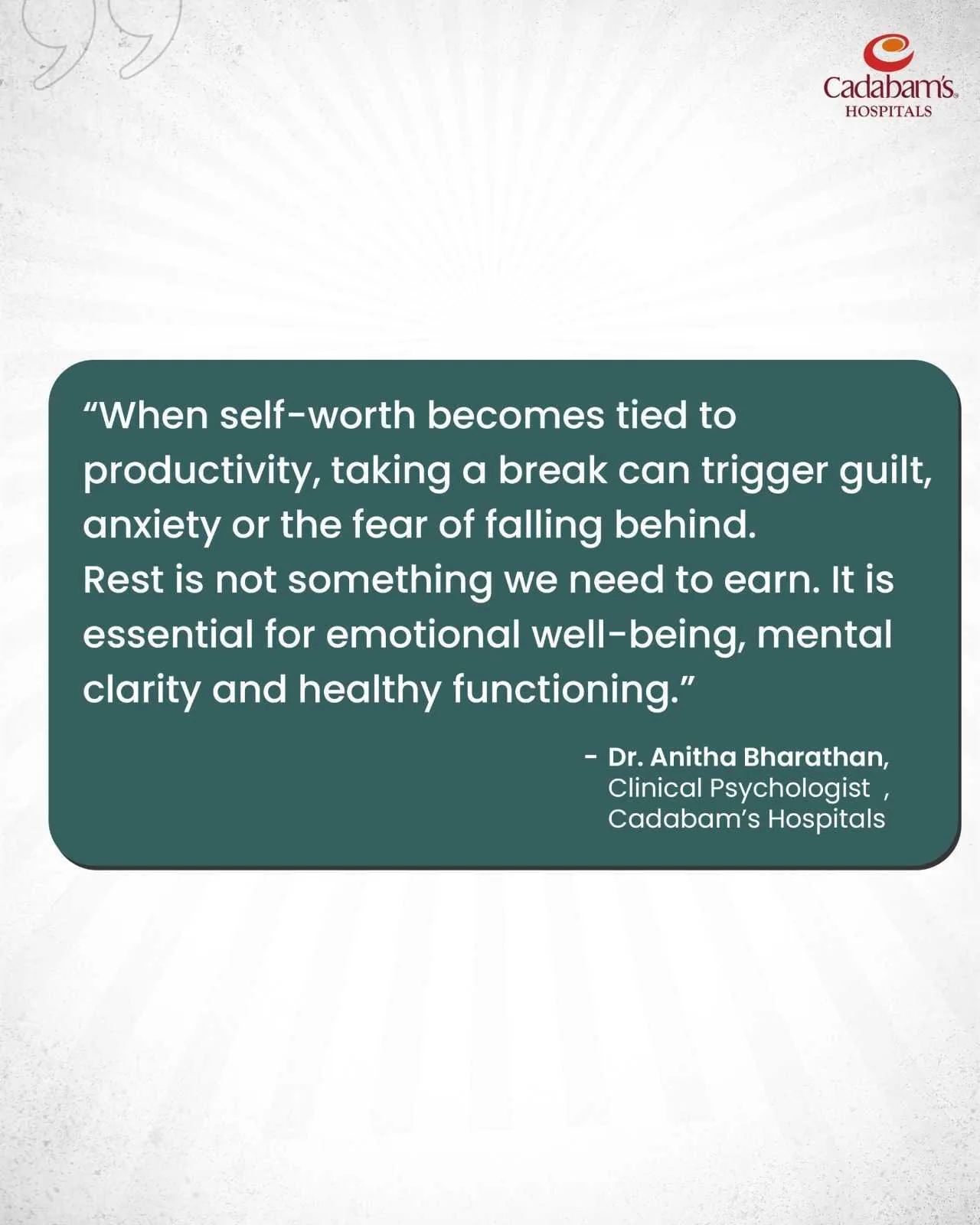
"It is important to recognise that rest is not something we need to earn after exhausting ourselves. It is a basic requirement for psychological and physical functioning," said Dr. Bharathan. Adequate rest supports emotional regulation, attention, memory and decision-making. People who repeatedly ignore their need to recover can become more irritable, mentally fatigued and less effective, even while they appear productive.
Unlearning the guilt
Dr. Bharathan suggests gradually challenging the belief that every moment must be useful. Start by scheduling short breaks with no productivity goal attached, and notice the thoughts that come up. Rather than treating guilt as proof of doing something wrong, recognise it as a learned response that can be unlearned.
If an inability to rest persists alongside significant anxiety, sleep problems or burnout, Cadabam's Hospitals' psychologists and psychiatrists can help identify the patterns underneath. Call +91 97414 76476 for a confidential consultation.