
This guide explains how the diagnosis is made in India — the ICD-10 and DSM-5 criteria, the clinical interview and mental state examination, the tests that rule out look-alike conditions, why it sometimes takes more than one visit, and what to bring to a first appointment. Ready to start? Call 97414 76476 or book an assessment.
The Cadabam’s Hospitals Difference
Why Cadabam’s Hospitals? What Makes Us Different?
Through our 8 specialty centers offering top-notch treatments across the nation, we have been helping thousands of people improve the quality of their lives.
33+
Years of Experience
10,000+
Happy Families
20+
Treatment Modalities
400+
Mental Health Experts
With over 33 years of expertise and knowledge, we promise to provide our clients the treatment that suits them the best. Whether the case involves substance addiction, alcoholism, sleeping issues, bipolar disorder, or schizophrenia, our experts know how to handle it in a way that it’s in the best interest of the client and their family.
Our state-of-the-art infrastructure, experienced professionals, and strong support system enable us to offer world-class evidence-based treatment that fits all stages and types of mental health concerns that you may have.
At Cadabam’s Hospitals, we’ve always got your back.
Our Facilities
Our Infrastructure & Care Facilities
Purpose-built rehabilitation centres, clinical equipment, and support services designed to drive better patient outcomes.

Ananya Campus
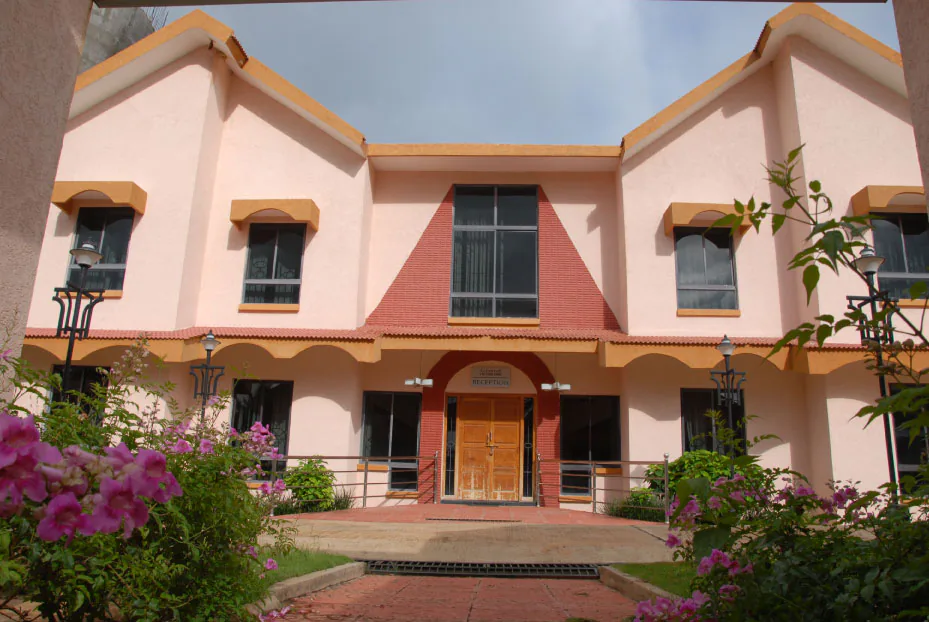
Ananya Rehabilitation Centre

Private Cottages

Campus Entrance
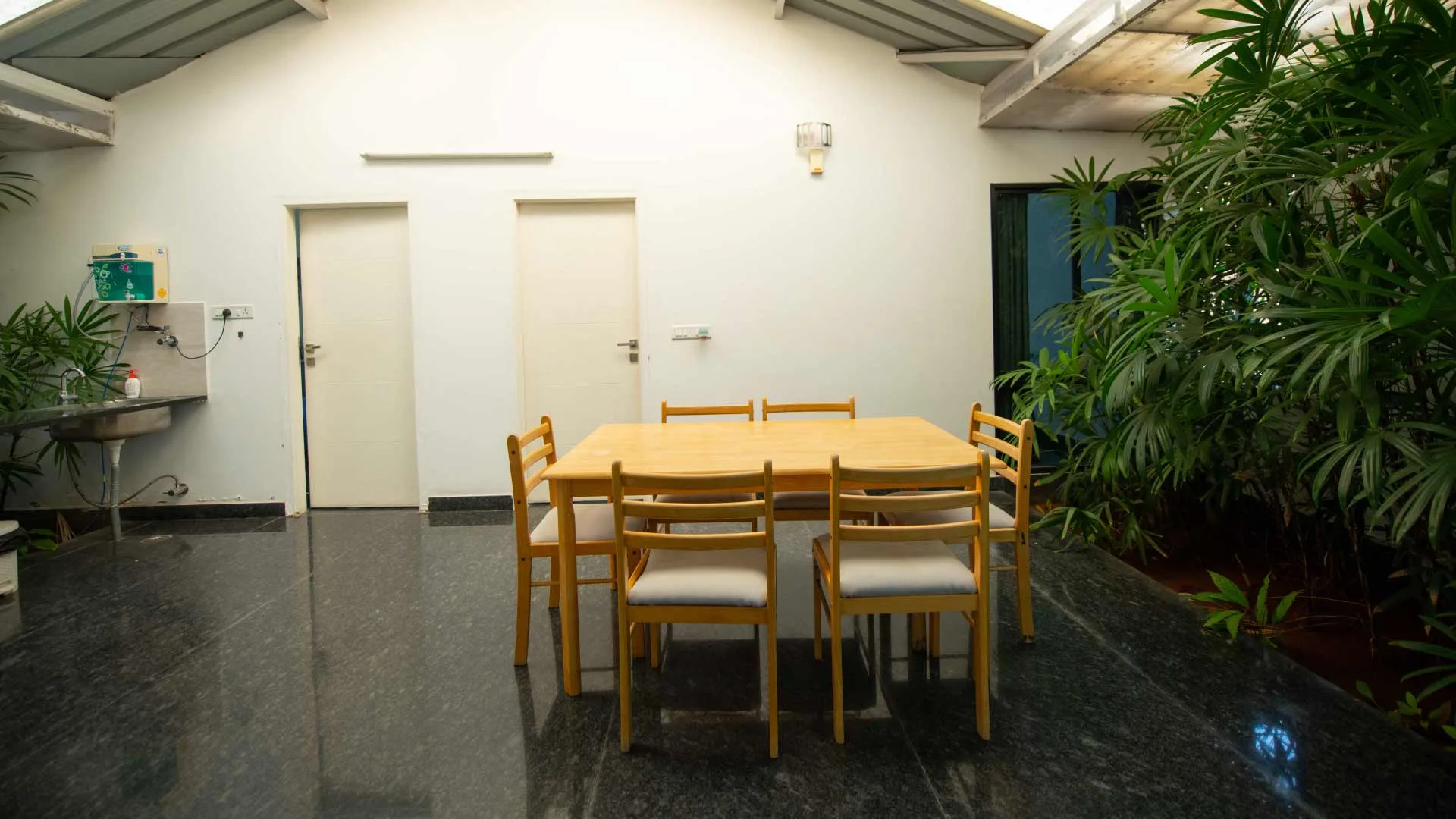
Healing Environment
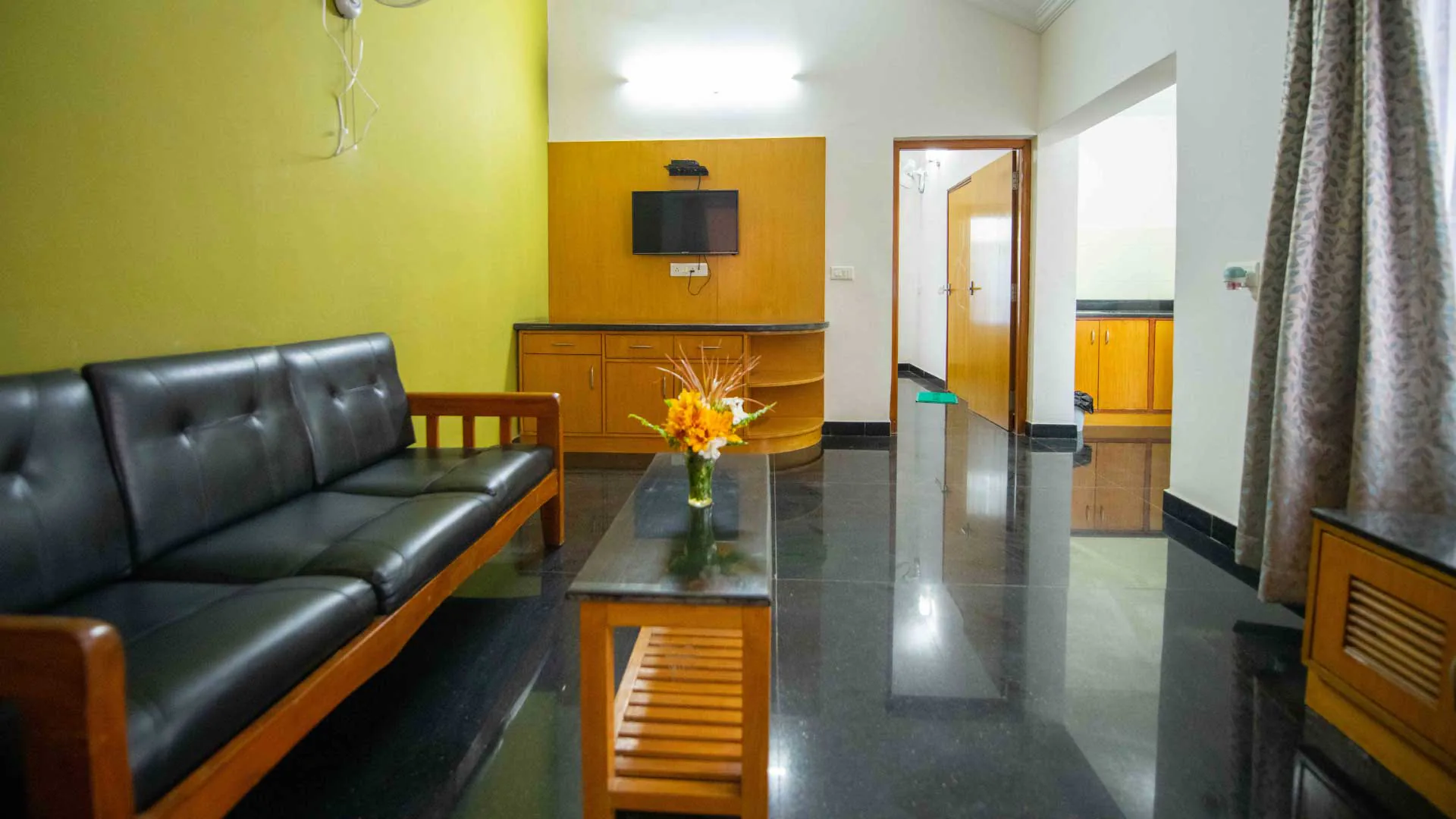
Hospital Lobby
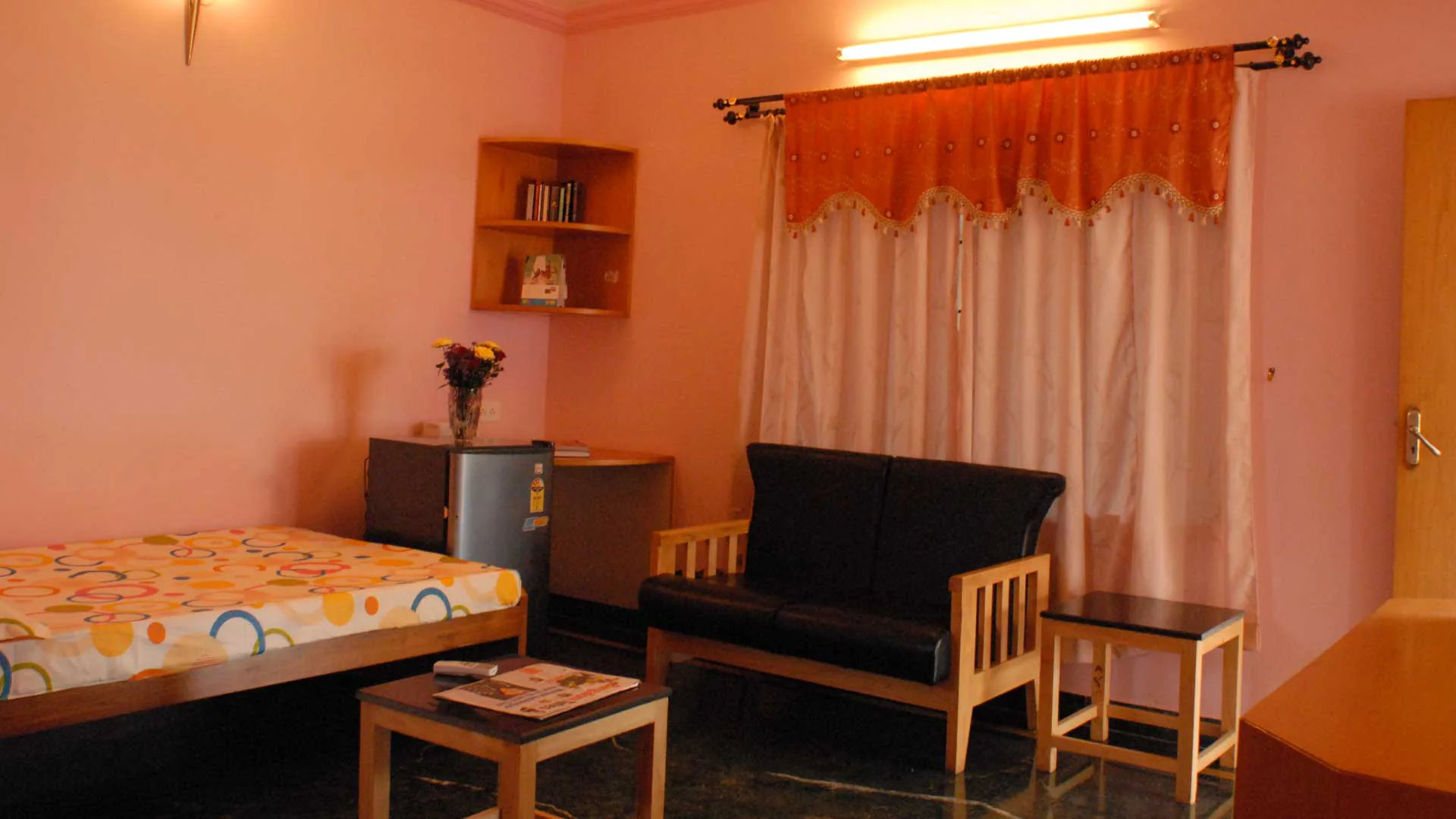
Recovery Experience

Rehab Unit
Patient Stories
What Our Clients Have To Say
Real stories from the families and individuals we’ve supported on their path to well-being.
5.0
Cadabam's Hospitals' team treated my family with empathy from the very first call. The care plan was clear, the doctors listened, and we finally felt supported through a difficult time.
A
Aishwarya G.
Verified patient
5.0
The therapists and psychiatrists worked together on a plan that actually fit our situation. Three decades of experience really shows — calm, professional, and genuinely caring.
S
Suresh L.
Verified patient
5.0
I was nervous about reaching out, but the team made me feel safe. The structured therapy and follow-ups have helped me get back to my routine and feel like myself again.
R
Rahul M.
Verified patient
Trusted by 10,000+ families · 4.5 ★ on Google Reviews
Why There'S No Single Test for Schizophrenia
Schizophrenia is diagnosed by its pattern of symptoms and their duration, not by a lab result. Tests still matter — but their job is to rule out other conditions that can look like schizophrenia (from thyroid problems to substance effects), so the psychiatrist can be confident in the diagnosis. This is why a thorough assessment, not a quick label, is the standard of good care.
As Dr. Nishmitha, Consultant Psychiatrist, Cadabam's Hospitals, puts it: "There's no blood test for schizophrenia. It's a clinical diagnosis: a detailed conversation, a mental-state examination and history from family. Tests rule out other causes." Even after every investigation is back, the diagnosis is still made by the psychiatrist from the overall picture — "still very much a clinical diagnosis," in her words.
A "schizophrenia test", then, means one of three things — the psychiatrist's diagnostic assessment, the rule-out investigations, or an online self-test — and only the first produces a diagnosis.
The Diagnostic Criteria: ICD-10 and DSM-5
Psychiatrists use recognised criteria (ICD and DSM). In broad terms, a diagnosis requires characteristic symptoms — such as delusions, hallucinations, disorganised speech, grossly disorganised behaviour, or negative symptoms — present for a significant period, with a meaningful impact on daily functioning, and persisting for a minimum duration. Other causes, including mood disorders and substance use, must be excluded. Understand the symptoms in detail →
ICD-10: the Criteria Used Day-to-Day in India
Most Indian psychiatrists, hospitals and insurers work with the WHO's ICD-10, where schizophrenia is coded F20. ICD-10 asks for at least one very characteristic symptom (such as thought insertion, delusions of control, or voices commenting on the person) or at least two less specific ones (persistent hallucinations, thought disorder, catatonic behaviour, negative symptoms) — present for most of the time over at least one month. ICD-10 also still names the subtypes: F20.0 paranoid, F20.1 hebephrenic, F20.2 catatonic, F20.3 undifferentiated, F20.5 residual and F20.6 simple. Explore the types of schizophrenia →
DSM-5: the Six-Month Frame
The American DSM-5 requires two or more core symptoms — at least one of them delusions, hallucinations or disorganised speech — for much of one month, with continuous signs for at least six months (including milder prodromal or residual periods), and a clear decline in work, relationships or self-care. ICD-11, the WHO's newer edition (code 6A20), keeps the one-month duration and, like DSM-5, drops the named subtypes for symptom dimensions. In India, ICD-10 remains the everyday working frame; DSM-5 and ICD-11 are the newer frames your psychiatrist may also refer to.
ICD-10 vs DSM-5 at a Glance
| ICD-10 (WHO; standard in Indian practice) | DSM-5 (American Psychiatric Association) | |
|---|---|---|
| Code | F20 (F20.0–F20.9 by subtype) | 295.90 / F20.9 |
| Minimum duration | Characteristic symptoms for at least 1 month | Continuous signs for 6 months, including at least 1 month of active symptoms |
| Core symptoms | One "first-rank"-type symptom, or two from a wider list | Two of five, at least one being delusions, hallucinations or disorganised speech |
| Decline in functioning | Not a formal requirement | Required (work, relationships or self-care) |
| Subtypes | Named (paranoid, hebephrenic, catatonic, undifferentiated, residual, simple) | Dropped; symptom dimensions rated instead |
| Episodes under 1 month | Acute and transient psychotic disorder (F23) | Brief psychotic disorder; schizophreniform disorder (1–6 months) |
For families, the practical difference is timing: ICD-10 allows a diagnosis after one month of clear symptoms; DSM-5 may mean a provisional label until six months have passed. Neither delays treatment.
The Assessment Process, Step by Step
A proper assessment usually includes:
- Clinical interview — a detailed conversation about symptoms, their timeline, and their effect on life.
- Family/collateral history — because insight can be limited, input from relatives is invaluable.
- Mental state examination — the psychiatrist's structured observation of thinking, mood and perception.
- Physical examination and tests — to exclude medical causes.
- Assessment over time — sometimes a diagnosis is confirmed across more than one appointment.
The Clinical Interview
The interview is the heart of the diagnosis. The psychiatrist asks what has changed and when — onset, course, duration and progression — along with sleep, work or studies, substance use, physical health, medications and family history. Where the person is guarded or does not believe anything is wrong, the psychiatrist works around that gently rather than confronting it.
The Mental State Examination (MSE)
Alongside the interview, the psychiatrist carries out a mental state examination — psychiatry's equivalent of a physical examination. It records appearance and behaviour, speech, mood, the form of thinking (is it connected and logical?), its content (beliefs, suspicions), perception (voices, visions), attention and memory, and insight — whether the person recognises that their experiences may be symptoms. The MSE turns a conversation into clinical evidence that can be matched against the criteria.
Collateral History From the Family
Because insight is often limited in schizophrenia, the family's account is frequently the most important part of the picture: relatives notice the withdrawal, the change in sleep, the muttering or the new suspicions long before the person describes them. Where the person will not attend at all, Cadabam's offers proxy consultation — the family meets the psychiatrist first, with a timeline and, where possible, recent videos of the behaviour — so a plan can begin. What to do when a relative refuses help →
Tests That Rule Out Other Causes
While no test confirms schizophrenia, your psychiatrist may order investigations to exclude look-alike conditions — blood tests (thyroid, vitamin levels, infection markers), urine or blood screening for substances, and occasionally brain imaging (MRI/CT) or an EEG where a neurological cause needs excluding. Normal results don't "miss" schizophrenia — they help confirm it by ruling out other explanations.
Specifically, these investigations look for causes that can mimic psychosis: a brain tumour, bleed or mass (which can produce visual or olfactory hallucinations), metabolic disturbances (for example a drop in sodium, or raised creatinine/kidney function markers that can trigger sudden behavioural change), and substances (via a urine drug screen). Your psychiatrist may also use structured psychometric assessments — such as the Rorschach or MMPI, administered by a clinical psychologist — to support the picture. Even with all of these, the diagnosis itself remains clinical — made by the psychiatrist from the overall pattern, not by any single test.
| Investigation | What it looks for | Why it matters |
|---|---|---|
| Blood tests — sodium, creatinine / kidney function, thyroid, vitamin B12, infection markers | Metabolic, hormonal, nutritional or infective causes | A low sodium or kidney problem can trigger sudden psychosis that settles once treated |
| Urine drug screen | Cannabis, stimulants, other substances | Substance-induced psychosis is managed differently |
| MRI or CT brain scan | Tumour, bleed, mass, stroke | Visual or smell-based hallucinations prompt a scan; a normal scan is expected |
| EEG (where indicated) | Seizure activity, especially temporal-lobe epilepsy | Some seizure disorders produce psychotic symptoms |
| Psychometric tests — Rorschach, MMPI (clinical psychologist) | Thought disorder, personality and symptom patterns | Supports the picture; not diagnostic alone |
Conditions We Distinguish It From: the Differential Diagnosis
Part of the psychiatrist's job is telling schizophrenia apart from conditions that resemble it: schizoaffective disorder, bipolar disorder with psychosis, severe depression with psychosis, substance-induced psychosis, delusional disorder, and medical causes. It is also not the same as dissociative identity disorder. Schizophrenia vs "split personality" →
The psychiatrist's questions here are specific. Do the psychotic symptoms appear only when mood is very high or very low, or continue when mood is settled? Are the delusions bizarre, or plausible-but-untrue? Did they start with a substance and fade as it cleared? Is there a long history of obsessions with preserved insight, or developmental differences since childhood? We have a dedicated comparison for each common confusion — including OCD and autism — so this page does not repeat them.
Why Diagnosis Sometimes Takes More Than One Visit
Two things make a single-visit diagnosis the exception. First, the criteria include duration: a first episode that has lasted a fortnight does not yet meet the one-month ICD-10 threshold, let alone DSM-5's six months, so the psychiatrist may record acute and transient psychotic disorder as a working diagnosis and review it. Read about acute and first-episode psychosis →
Second, the picture changes with treatment. Once sleep is restored and acute symptoms settle, it is easier to see what remains — persisting negative symptoms, an emerging mood disorder, or a psychosis tied to a substance. A diagnosis confirmed over two or three reviews is far more reliable than one made mid-crisis. As Dr. Nishmitha says: "Because the criteria include how long symptoms last, it's sometimes confirmed over more than one visit."
Waiting for the label does not mean waiting for treatment. Dr. Priya Raghavan, Consultant Psychiatrist, Cadabam's Hospitals, on the duration of untreated psychosis: "If you institute treatment earlier there is a lot of evidence to say that response rates and outcomes are much better than if you leave the symptoms lingering for a long period of time." The diagnosis may take weeks to finalise; the help starts on day one.
What to Expect at Your First Appointment — and What to Bring
Come with a timeline of what you've noticed, a list of any medications and substances used, and, ideally, a family member who can add detail. The first appointment is a conversation, not a test to pass. The psychiatrist will explain their thinking, may order investigations, and will discuss next steps. A diagnosis is the beginning of a treatment plan — not a verdict. What happens next: treatment →
A Checklist for the First Visit
Dr. Nishmitha's advice to families is to bring three things: the history — onset, course, duration and progression; triggers and substance use; and previous treatment, with any prior records. In practice:
- A written timeline — the first change you noticed, with rough dates. Notes on your phone are enough.
- Specific examples — what the person said or did, rather than "behaving strangely"; a discreet short video of an episode is often more useful than a description.
- Sleep, routine and substances — nights without sleep, missed college or work, cannabis or alcohol use, honestly stated.
- Medical and family history, current medicines — thyroid or neurological conditions, prescriptions, any relative with schizophrenia, bipolar disorder or depression.
- Previous reports — prescriptions, discharge summaries, scans, psychologist reports.
- A relative who has seen the changes — ideally the person who lives with them.
A first assessment typically takes an hour or more; you leave with an initial plan — which may include starting treatment that day — and a review date.
"Schizophrenia Test Online": Why Self-Tests Are Not a Diagnosis
Online questionnaires that ask "do you hear voices?" or "do you feel people are against you?" can be a useful first nudge — they put words to a worry. They cannot diagnose schizophrenia. A screener cannot examine mental state, take a collateral history, or rule out a low sodium or a cannabis-induced psychosis. Many of its questions are answered "yes" by people with depression, anxiety, grief or sleep deprivation, and "no" by people with schizophrenia who lack insight into their symptoms.
Treat a self-test as a reason to book an assessment, not as an answer. If a questionnaire — or your own instinct — says something is wrong, the next step is a psychiatrist, not a second questionnaire. Call 97414 76476 and describe what you are seeing.
Diagnosis in Children, Teenagers and Older Adults
The same criteria apply at every age, but the differential diagnosis shifts. In children and adolescents, schizophrenia is uncommon, and it must be distinguished from autism, mood disorders, trauma responses and imaginative play; childhood-onset illness is assessed by a child and adolescent psychiatrist. Schizophrenia in children →
In older adults, new psychotic symptoms more often point to delirium, dementia, a stroke, a medication effect or a late-onset mood disorder, so medical investigation is weighted more heavily and an old-age psychiatrist is usually involved. A first diagnosis of schizophrenia after sixty is unusual and is made only once these causes are excluded. Cadabam's old-age psychiatry team, led by Dr. Priya Raghavan, assesses these presentations.
What Happens After a Diagnosis
A diagnosis is the start of a plan. The psychiatrist explains it to the person and the family together, sets out the treatment options — antipsychotic medication, psychological therapy and, where appropriate, neuromodulation — and agrees the setting: outpatient care, a short structured admission for an acute episode, or residential rehabilitation. How schizophrenia is treated →
Psychoeducation for the family begins at the same time — what the illness is, what the medicines do, what early relapse looks like. Under the Mental Healthcare Act, 2017, an adult with capacity consents to their own treatment and can name a nominated representative; where capacity is lost or there is serious risk, supported admission is a clinical decision, reviewed regularly, that reverts to consent-based care as the person recovers. Over the following months, psychosocial interventions rebuild routine and function, and families learn to support recovery at home. The diagnosis is reviewed at each stage and revised if the course suggests a different condition.
When to Get Help — and What Cadabam'S Does
Seek an assessment if someone has shown, over weeks, a cluster of changes — disrupted sleep, withdrawal, a fall in studies or work, suspiciousness, talking to themselves, or beliefs that cannot be reasoned with. Seek help today if there is any talk of harm to self or others, or the person has not slept for days, is confused, or cannot look after themselves. Call 97414 76476 — 24 hours a day. If the person refuses to come, say so; a proxy consultation or a home-based assessment by our Psychiatric Emergency Team is often the right first step.
Cadabam'S Assessment Pathway
A Cadabam's diagnostic assessment follows the process on this page: a psychiatrist takes the history and collateral history, carries out the mental state examination and orders the rule-out investigations — bloods, urine drug screen, MRI or CT where indicated — on site. A clinical psychologist administers psychometric testing where it adds to the picture, and a psychiatric social worker meets the family. The psychiatrist then explains the working diagnosis, what is being excluded and the plan, with a review date. Assessment and inpatient care are delivered at Cadabam's Hospitals JP Nagar, Cadabam's Hospitals Whitefield and Cadabam's Spark Hospital, Mysuru; longer-term psychosocial rehabilitation continues at Cadabam's Amitha, Cadabam's Anvita and Cadabam's Ananya. Families in Bengaluru, Mysuru and Hyderabad are seen by consultant psychiatrists including Dr. B.R. Madhukar, Dr. Nishmitha and Dr. Sneha Naveen.
Get an Assessment
A clear diagnosis is the foundation of effective treatment — and it can begin today, whether or not the person is ready to come in.
Call 97414 76476 or book a diagnostic assessment with a Cadabam's psychiatrist in Bengaluru, Mysuru or Hyderabad.
FAQ
Frequently Asked Questions
By a psychiatrist, clinically — through interview, mental state examination, family history and tests to rule out other causes — using established criteria, not a single lab test. In India the working criteria are usually ICD-10 (code F20), which asks for characteristic symptoms over at least one month; DSM-5 asks for six months of continuous signs.
No single test confirms it. Blood tests, substance screens and sometimes brain imaging are used to exclude other conditions that can mimic it. The "test" that actually produces a diagnosis is the psychiatrist's assessment — a clinical interview, mental state examination and collateral history — matched against ICD-10 or DSM-5 criteria.
Sometimes one detailed assessment; often it is confirmed over more than one appointment, since the criteria include symptom duration. ICD-10 requires at least one month of characteristic symptoms and DSM-5 six months. Treatment does not wait for the final label.
It can be confused with schizoaffective disorder, bipolar disorder or substance-induced psychosis — which is why a thorough assessment matters. Depression with psychosis, delusional disorder, OCD with poor insight, autism and medical causes can also resemble it.
A timeline of symptoms, a list of medications and substances, and, if possible, a family member. Dr. Nishmitha's three essentials: the history, triggers and substance use, and any treatment already tried, with prior records.
F20 is the ICD-10 code for schizophrenia, with a fourth digit for the subtype — F20.0 paranoid through F20.9 unspecified. ICD-10 is what most Indian hospitals, psychiatrists and insurers use day-to-day; in ICD-11 the code is 6A20.
The main difference is duration: ICD-10 requires characteristic symptoms for at least one month; DSM-5 requires continuous signs for at least six months. DSM-5 also requires a decline in functioning and dropped the named subtypes ICD-10 keeps.
Online questionnaires can flag that something is wrong, but none can diagnose schizophrenia. A screener cannot examine mental state, take a family history or rule out medical and substance-related causes. Treat a worrying result as a reason to book an assessment.
No — normal results are the expected finding in schizophrenia. Scans and blood tests exclude other explanations (tumour, bleed, low sodium, thyroid, substances); when they are normal, the psychiatrist is more confident in a clinical diagnosis, not less.
A psychiatrist makes the diagnosis and prescribes and monitors treatment. A clinical psychologist plays a supporting role — psychometric testing, assessing thinking and insight, and later therapy. At Cadabam's, assessment is psychiatrist-led, with psychologists and psychiatric social workers in the same team.
Insights From Our Experts
Recent Stories from Our Blog
Psychological issues
Women's Mental Health
Psychological issues
Stress & Burnout
Newsletter